A Mighty Fortress

Circuit Reformation Service
10/27, 4:00pm at Grace Lutheran Church (1155 N. Highland Ave NE in Atlanta)

The celebrant will be Rev. Adam Ellsworth.

The preacher will be Rev. Jacob Berlinski.

There will be a sausage supper to follow (with beer).
Please RSVP for your congregation to Grace Lutheran and please bring a side to share.

Psalm 46 – God Is Our Fortress

To the choirmaster. Of the Sons of Korah. According to Alamoth. A Song.

1God is our refuge and strength,

a very present help in trouble.

2Therefore we will not fear though the earth gives way,

though the mountains be moved into the heart of the sea,

3though its waters roar and foam,

though the mountains tremble at its swelling. 

4There is a river whose streams make glad the city of God,

the holy habitation of the Most High.

5God is in the midst of her; she shall not be moved;

God will help her when morning dawns.

6The nations rage, the kingdoms totter;

he utters his voice, the earth melts.

7The Lord of hosts is with us;

the God of Jacob is our fortress. 

8Come, behold the works of the Lord,

how he has brought desolations on the earth.

9He makes wars cease to the end of the earth;

he breaks the bow and shatters the spear;

he burns the chariots with fire.

10“Be still, and know that I am God.

I will be exalted among the nations,

I will be exalted in the earth!”

11The Lord of hosts is with us;

the God of Jacob is our fortress.


Kairos Network Meeting (October 2018)

Saints of God, only through the atoning blood of the Son of God,

The next Kairos Network mission meeting will be at Rivercliff Lutheran Church in Sandy Springs, GA on October 13 at 9:30 AM.

Coupled with the Circuit Forum for our Atlanta North congregations, we will be discussing the mission and direction of our newest church plant – Trinity Lutheran Church.  We can’t wait for you to come and hear about it!

The schedule for the dual meetings are below.

9:30 – 10:00    Fellowship and Devotion
10:00 – 10:30   Elections / Business
10:30 – 11:30   Outreach in the North Atlanta Circuit
                                – Kairos update
                                – District initiative
                                – Outreach opportunities: A time of brainstorming ideas
11:30                   Close with prayer


+Soli Deo Gloria

Relax and Reach Out!

The pressure is on.  We think we have to be experts to be involved in God’s mission.  Only the professionals can make things work in evangelism.  We think we need to be geniuses to advance the ball in our increasingly secular age.  Many claim it is impossible to even raise up children in our twisted times.  Think again!

This little book written by Pastor Andrew Richard will give you peace in God’s Word and in the grace of our Lord Jesus Christ as you carry out your role in the Lord’s Kingdom.  And . . . it is very short.  Bonus!

Here is an excerpt from Rev. Richard to get you started.  This is a little section on raising children . . .

“So young men and young women are getting married to faithful Lutherans and having children. Excellent! Now comes the lifelong duty of parents: “Fathers, do not provoke your children to anger, but bring them up in the education and instruction of the Lord” (Eph. 6:4).

Unfortunately, we’ve generally come to believe as a society that education is best left to the professionals and that the average parent is unsuited to teaching his or her children. This is nonsense. The child has no other teachers than his parents for the first several years of life and learns to do a great many things just fine. When it comes to bringing children up in the education and instruction of the Lord (let’s call it catechesis for short), parents have generally followed the secular education model of “trust the professionals.” This often turns into taking children to Sunday School and Confirmation classes, and never cracking open a Bible or praying at home.

If parents do this because they’re lazy and shirk their God-given duty, then they need to hear the call to repentance: “It is your duty to bring up your children in the education and instruction of the Lord. You need to be reading God’s Word to them. You need to be praying with them.” However, if parents aren’t living up to their duty because they don’t think they can do it, then they need mercy and help.

As great a task as it is to catechize a child, it is not a complicated one. It doesn’t require a great deal of cleverness, just a great deal of persistence. Luther’s Small Catechism is a wonderful help in catechizing children. Start with the Daily Prayers section of the Small Catechism. Luther arranged this section brilliantly, in that he attached daily prayer to things that people were already doing every day: we get up every day, we eat every day, we go to sleep every day. And so, he has a morning prayer, a mealtime prayer, and an evening prayer.

The morning and evening prayers are very short orders that include the Invocation, the Apostles’ Creed, the Lord’s Prayer, and another prayer corresponding to the time of the day. Parents can use these when their children get up in the morning and go to bed in the evening. The prayer called “Asking a Blessing” goes before the meal, and the thanksgiving called “Returning Thanks” goes afterward. By praying these, children will very quickly learn some of the chief parts of the Christian faith and will also develop a healthful Christian piety.

Children will learn these routines very quickly, and routine is key! God has built into children (and into all people, but especially children) a love of routine. This is a great help to parents. Say a father leads his family in morning, mealtime, and evening prayers for a week, and then suddenly forgets to do it, or grows slack: the children will demand the routine! This means that beginning the routine is the hard part, because that depends on the father. But continuing the routine is significantly easier because the children themselves will call for it. They won’t go to bed until they say the evening prayer with Dad.

There are many other aids for catechizing children, and I recommend that every father consult a faithful pastor concerning which aids to use in his home. I won’t offer many specific recommendations here, but I will say two things: First, have a family Bible, and pick a time each day when the father reads from it to his family. And second, have a couple of hymnals in the home, the same ones used in church, and sing from them as a family.

Now there are two things that are particularly harmful to good catechesis in the home, and they are dangerous because they teach other catechisms that are not Christian. The first is the public school. Public schools should more properly be called “government schools,” because that comes closer to the reality, given that they’re funded by the government. Government schools have a certain catechism to teach, with its own commandments and articles of faith. And make no mistake, this catechism seeks to overthrow the Ten Commandments and dismantle the Apostles’ Creed.

It’s helpful to remember that all education is religious education. All education necessarily involves teaching students how they should view the world, how they should behave, what they should consider to be virtue and vice, what they should believe, what they should tolerate and what they should not. Education will either correspond to the Christian faith and be a great help to parents in catechizing their children, or it will contradict everything that parents are teaching at home.

It may be possible to send Christian children to government schools without completely jeopardizing their faith. But their faith will be challenged in a way that’s not helpful, and they will be tempted to myriad sins, and will be subject to the teachings of another religion. Can Christian children survive such an education? Perhaps, but we should be interested in much more than their “survival.” Parents should educate their children according to their God-given duty, not according to what’s easiest or what everyone else is doing. If members want to assist parents in finding viable alternatives to public schools, the congregation could consider hosting a homeschool co-op or even opening a classical Lutheran school.

The second danger to good catechesis is the screen. I’ll start with the television. The television is generally populated with sin and false teaching. Children’s programs may claim to be purely “educational,” and maybe some are, so that families will get into the habit of having the TV on all the time without considering any harm being done. But even children’s shows are pushing sinful agendas—for example, blatantly promoting false definitions of marriage and family. More subtle, and more dangerous to the well-catechized child, is the constant theme that those who follow their emotions (their hearts) are free and happy, while things like duty and physiology are mere human constructs. And the fact remains that much entertainment is nothing else than watching other people break God’s commandments and learning to delight in it.

Now the television is not a catechism like Luther’s Small Catechism. The television does not often state its commandments or articles of faith. And it’s the more dangerous because so much is implied without being said. Television shows have a way of manipulating the emotions so that we feel bad about certain things and happy about others. And if you have a habit of watching television, give this some conscious thought and it won’t take long to realize that you’re often rejoicing at sin and feeling happy at words or deeds that contradict God’s Word. The mind may be fully aware of the Ten Commandments and the Apostles’ Creed, but if the emotions are enslaved to another law and another faith, how much harm will come of it!

If only the catechesis of the screen were limited to the television that sits stationary at home! But how many kids now carry around phones and have unsupervised access to the internet? What sorts of things are children seeing as they scroll through their Facebook feeds? What videos start playing automatically before their eyes? Who put those videos there, and to what end? Where does the knot of links lead? Children can quickly find themselves in the labyrinth of “You might also like,” “Related content,” “Recommended for you,” and it’s like playing Russian Roulette: not all the chambers are empty, and how long until a child has something lodged in his brain that doesn’t belong there, something that he can’t get out? And all this to say nothing of the great harm that comes from what we might call disembodied friendship: ten children sitting on benches at a park, staring enraptured at screens, never breathing a word to one another, not daring even to make eye contact. Beware the lying and dehumanizing catechesis of the screen!

How does the realm of catechesis apply to the congregation as a whole? First, those parents who are concerned about “the lost” should ensure before all else that they’re giving such concern to their own children. It is a nasty trick of Satan that when we think of outreach we often skip right over those closest to us, to whom we are bound by God-given duty, and focus instead on unknown somebodies. Second, congregations should do all they can to aid the fathers in their midst in carrying out what God has given them to do. All members can offer encouragement to fathers who bring their children to church. Pastors can visit with fathers, pray for them, and provide practical advice for shepherding their households. Church councils can arrange meetings such that the fathers are not pulled away unnecessarily or lengthily from their duties toward their families. In this way families will prosper under the headship of the father as he catechizes his children.”

Excerpt from “BE AT LEISURE: A LUTHERAN APPROACH TO OUTREACH” written by Pastor Matt Richard.  Presently available at Lulu.com.

 

About Time

Look at these great bullet points from Rev. Matthew Harrison about our Lord’s eternal work within the confines of time.  It is definitely a comfort for all of us who are becoming aware that “we cannot do it all.”  Better yet, “we cannot do it at all.”  May you take comfort in what you cannot do, but what our Lord Jesus Christ HAS DONE.

In Christ,

The Kairos Network


by Matthew C. Harrison

As happens every month, I was told that the deadline for The Lutheran Witness was at hand. “What’s the theme?” I asked again. “Time” was the response. Hmmmmm.

Time. Does the Bible say that much about time? My thoughts immediately moved to mortality. My wife’s lovely mother has just passed from this vale of tears to eternity. I’d known her for 40 years. A blessed Christian mother, as lovely inside as out, who believed deeply in Jesus her Savior, loved studying the Word of God and prayed for us every day — all with joy and laughter and strength of faith along the way. The last year had been very difficult for her, and for her caring husband and children. Not two weeks ago I was face to face with death, again.

Time often strikes as Law. Saying goodbye to loved ones is bitter. Contemplating one’s own mortality is sobering, to say the least. I’ve been by the bedside of dying loved ones. I’ve completed the death watch with many parishioners as a pastor. I’ve sung many Easter hymns alone with dying Christians, and with grieving family present. I, we, they, believed and believe in Christ. But death is bitter.

My time on earth is now. It’s but a flash and gone. I think of all the generations past. What a strange privilege it is to be alive now! And how small I feel! James 4:14 is truth: “You do not know what tomorrow will bring. What is your life? For you are a mist that appears for a little time (literally, as a “little phenomenon”) and then vanishes.”

Walking through the excavated ruins of Herculaneum in Italy, frozen in time by the ash of Mount Vesuvius in A.D. 70, I was struck by how very similar life was then — the carpentry (paneled wood doors in homes), provisions for water and sewage, art, decorated homes, flooring, social life, alcohol, debauchery, philosophy, hedonism, social status, wealth, poverty, trade, markets and restaurants. Despite all our technology today, there is finally “nothing new under the sun.” And death is ever present. These thoughts of mortality render me melancholy. That’s what time as Law gets you.

Nevertheless, the Bible has a shocking plethora of things to say about time, and much of it is of the blessed Gospel! In fact, it lifts the pall on time and reveals Christ in eternity.

  • Jesus Christ is the One who rules time and eternity. “To the only God, our Savior, through Jesus Christ our Lord, be glory, majesty, dominion, and authority, before all time and now and forever. Amen” (Jude 25).
  • God has ordered all time, and at just the right time, sent His Son for us. “But when the fullness of time had come, God sent forth his Son, born of woman, born under the law” (Gal. 4:4). “He was foreknown before the foundation of the world but was made manifest in the last times for the sake of you” (1 Peter 1:20). “For while we were still weak, at the right time Christ died for the ungodly” (Rom. 5:6). The Father sent Jesus at just the right time. Jesus “gave himself as a ransom for all, which is the testimony given at the proper time” (1 Tim. 2:6).
  • Eternity is near. “Blessed is the one who reads aloud the words of this prophecy, and blessed are those who hear, and who keep what is written in it, for the time is near” (Rev. 1:3).
  • Struggles with the world are part of living in time. “In the last time there will be scoffers, following their own ungodly passions” (Jude 18).
  • Time without Jesus is wasted on passions that lead to hell. “For the time that is past suffices for doing what the Gentiles want to do, living in sensuality, passions, drunkenness, orgies, drinking parties, and lawless idolatry” (1 Peter 4:3).
  • Times of trial are purposeful. “Humble yourselves, therefore, under the mighty hand of God so that at the proper time he may exalt you” (1 Peter 5:6).
  • Time with Christ is time looking to a blessed eternity. “Live for the rest of the time in the flesh no longer for human passions but for the will of God” (1 Peter 4:2).
  • The time we have on this earth is to be purposefully lived as Christians. “And if you call on him as Father who judges impartially according to each one’s deeds, conduct yourselves with fear throughout the time of your exile” (1 Peter 1:17).
  • God Himself, Creator of time, protects us in our earthly walk, preparing us for eternity. And we “by God’s power are being guarded through faith for a salvation ready to be revealed in the last time” (1 Peter 1:5).
  • God promises to be with us through time. “Let us then with confidence draw near to the throne of grace, that we may receive mercy and find grace to help in time of need” (literally: “at just the right time”) (Heb. 4:16).
  • Christ bids us hold to Him in faith, believe His Word and go to church. It is possible to fall away. “And the ones on the rock are those who, when they hear the word, receive it with joy. But these have no root; they believe for a while, and in time of testing fall away” (Luke 8:13).
  • Paul’s apostolic blessing covers our lives on this earth. “May the Lord of peace himself give you peace at all times in every way. The Lord be with you all” (2 Thess. 3:16).
  • Christians are to be wise about the time we have. “Walk in wisdom toward outsiders, making the best use of the time” (Col. 4:5).
  • We are to be sober about the world in which we live. “Making the best use of the time, because the days are evil” (Eph. 5:16).
  • We live in blessed hope and optimism, even in the face of death, because God has “a plan for the fullness of time, to unite all things in Christ, things in heaven and things on earth” (Eph. 1:10).
  • Now is the time for us to believe and to tell others of Jesus. “For he says, ‘In a favorable time I listened to you, and in a day of salvation I have helped you.’ Behold, now is the favorable time; behold, now is the day of salvation” (2 Cor. 6:2).
  • While our flesh looks at time as morbidity, by the Spirit we behold life to come. “Besides this you know the time, that the hour has come for you to wake from sleep. For salvation is nearer to us now than when we first believed” (Rom. 13:11). “For I consider that the sufferings of this present time are not worth comparing with the glory that is to be revealed to us” (Rom. 8:18).
  • The preaching of John the Baptizer and Jesus is as urgent and relevant today for us as it was for its first hearers. “The time is fulfilled, and the kingdom of God is at hand; repent and believe in the gospel” (Mark 1:15).

— Pastor Harrison

The Rev. Dr. Matthew C. Harrison is president of The Lutheran Church—Missouri Synod. 

No Reason To Be Bored

Bob Hiller of the Jagged Word wrote a blog at the end of last month entitled “No Reason To Be Bored.”  It tells us a ton about our culture inside and outside the church.  It is great in clarifying what the church is called to do, and what churches don’t need to do.  Enjoy!
“We don’t do the wave at baseball games.” So said the guy sitting behind me at the Angels game last weekend to his son.  “Why not?”  “Because that’s what you do when you’re bored. But there’s no reason to be bored. There is a baseball game going on. We’re here to watch the game.”
I wanted to hug him, but there was a game to watch. Justin Verlander was pitching to Mike Trout. The best was facing the best. There was no reason to be bored.
There is a myth going around that baseball is a boring game. Sure, it is slower than football or basketball. And of course, a slower game may bore you. But our lack of appreciation doesn’t mean the game is boring. It just requires concentration and understanding. It is a sport that demands more from its fans, but rising to the challenge is worth it. The skill and precision necessary to play the game are second to none. There is nothing harder in sports than hitting a 94 mph fastball, let alone pitching one consistently. If you think this is boring, go to Youtube and type in “Nolan Arenado plays.” You will not be bored.  To be sure, some parts of the game are more exciting than others. There is a good deal of downtime. But the peaks and valleys of the game create a rhythm that is both relaxing and thrilling at the same time. Baseball is beautiful.
But too many people are buying into the “baseball is boring” myth, including the people who sell Major League Baseball. Instead of working hard to educate folks on the game, the powers-that-be want to spice up your experience. So, now at every baseball game you have massive screens, fireworks, gimmicky races between innings, theme nights, cheerleader-type girls to entertain, and so on. At this particular game, there was a post-game firework display and a movie. People did the wave. A group of fans near us snuck in 25 beach balls and blew them up at the same time and threw them into the stands. OK, the last distraction was kind of awesome, but still, they brought the beachballs because they planned on being bored.
Anyhow, setting the beach balls and the wave aside for a moment, what struck me was how it’s not the “bored” fans who create distractions for themselves. It’s the folks who own the teams and the stadiums. They don’t believe that the product on the field can sell, so they add a bunch of gimmicks to make it more appealing. They don’t trust fans to learn the sport and love the game. Perhaps they don’t believe the game is that engaging. So, they give you something else to keep you entertained. But the game itself gets lost. Kids start watching the screen gimmicks and miss the excitement of a two-out full count.
(The other week, my boys were watching a game with me. It was something like the bottom of the fourth inning with nothing really happening in the game. With one out, the batter had a full count and my middle boy said, “This is where it gets exciting!” I’ve done something right.)
It strikes me that what the MLB owners are doing is analogous to what is happening in the Church. We believe that the Word of God is effective and powerful. It kills and makes alive. It opens our eyes to God’s will and accomplishes God’s work for us. When you hear the sermon, you are actually hearing what God has to say (if the pastor is doing his job)! When you receive the Lord’s Supper, God is putting the body and blood of Christ in your mouth! The liturgy actually draws you into the creative, redemptive, sanctifying work of the triune God! The Creator of heaven and earth, the crucified and risen Lord, the Spirit of life are at work there for you.
And people are bored.
The liturgy is too repetitive. The music is too slow. The preacher is too dry. So, we get bored and we want something more.
Instead of pastors doing what is necessary, that is, teaching people how the game works, instead of us instructing people on the importance of a liturgy that grows out of God’s Word and how participating in that liturgy unites you to the saints and angels around the throne of the Lamb, we decide to add gimmicks. We add more elements, more smells and bells, more smoke and screens. We create an ambiance which focuses on the activities being performed as opposed to Word being proclaimed. The temptation to such practices exists whether you are “high church” or “contemporary” or whatever label we slap on our perceived worship opponents. We build big sanctuaries, install amazing sound systems, choreograph a perfect service. And in all of it, we seem to have forgotten that the power resides in the Word.
We’re like the owners of Major League ball clubs who don’t believe baseball is entertaining. We don’t believe the Word has the power to accomplish God’s purposes. So, we add some gimmicks to keep people interested.
We would do well to remember St. Paul who came to Corinth and preached to a culture infatuated with pleasurable rhetorical performances. “And I, when I came to you, brothers, did not come proclaiming to you the testimony of God with lofty speech or wisdom. For I decided to know nothing among you except Jesus Christ and him crucified” (1 Corinthians 2:1-2). Paul simply preached Christ crucified with fear and trembling (2:3), and faith was born and a church was created and God worked. No strings or gimmicks, no fancy rhetoric or slick sales techniques. Just the Word. And believe it or not, the Word accomplished its purposes. Remarkably, miraculously, the Corinthians believed it.
When the worship and liturgy of our churches are drawn from and driven by the Holy Spirit’s Word, it may not be entertaining by the world’s standards. But it will create faith and accomplish God’s purposes. Pastors don’t need to seek to enhance the Word, nor do congregations need to try and start the wave in worship. Instead, both need to simply preach and hear the Word. Let the Word hold sway. When God’s Word is being proclaimed, there is no reason to be bored.   
Written by Bob Hiller on August 31, 2018

Hebrew & Greek Study Update

September 4 is the day we commemorate the greatest prophet of the Old Testament, Moses.  How appropriate it is for us to provide you with an update on the ongoing study of the very words the Lord’s gave him to write down on Mt. Sainai!  When Adam and Eve were overwhelmed by sin and terror after the fall (Genesis 3), the complete record given by the Holy Spirit to faithful Moses point us to Christ, our Deliverer, Who placed Himself between God and Man, as our Divine Mediator.  For all those around us hemmed in by their doubts, internal struggle, and self condemnation, our God has shown the world His compassion and fatherly disposition through the finished work of His Son on the Cross.  All glory to God for His grace!

There is now a permanent adjustment to the location of the Biblical Hebrew and Greek Study.  For the sake of traffic and accesibility, the study will take place each Tuesday, 10 AM, at Grace Lutheran Church on 1155 North Highland Avenue NE, here in Atlanta.  All are welcome to come and attend!  This should pretty much be the pattern for those who come from here on out.

August 2018 Update

IMG_8912 (1)
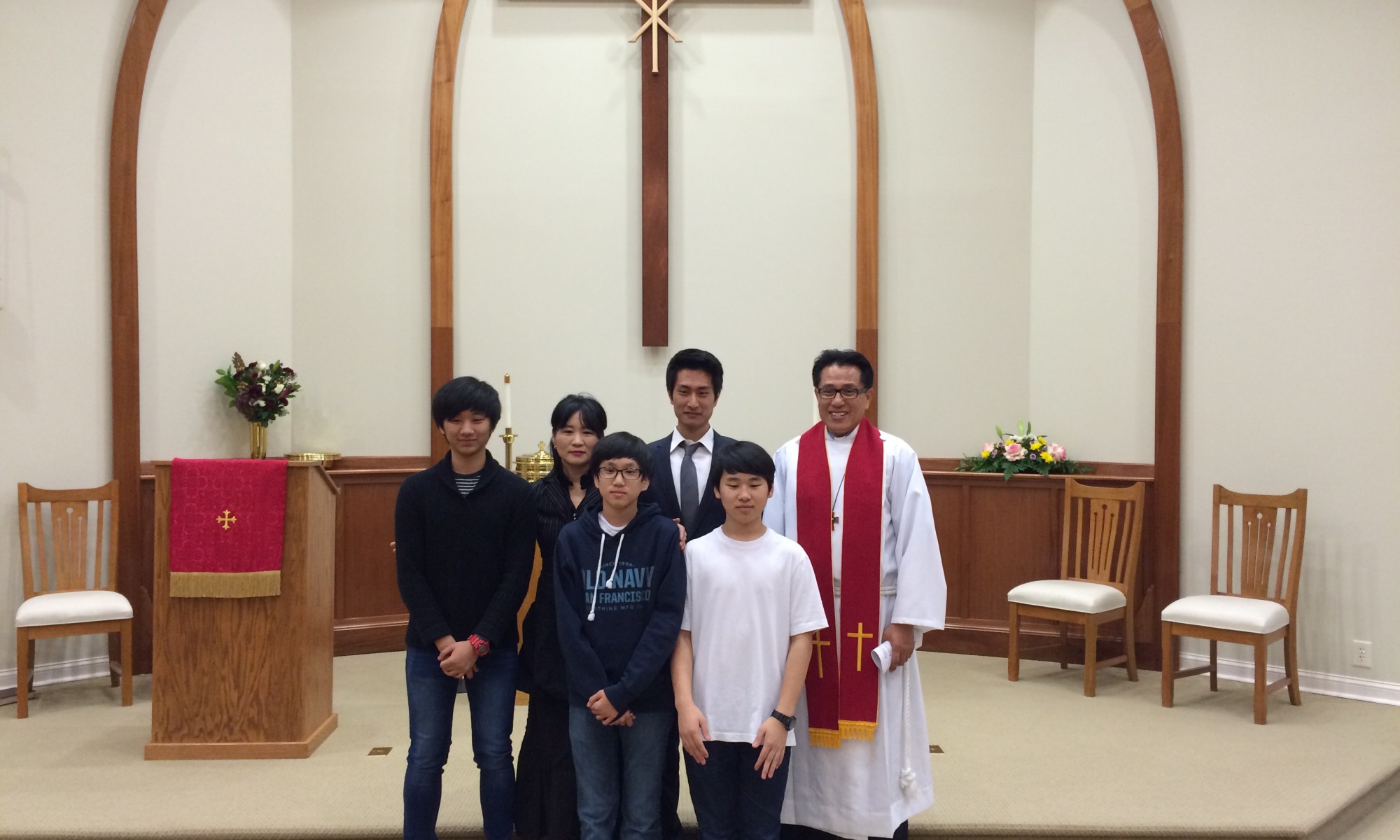
Rev. Min Soo Kim with his faithful family on the day of his ordination!

1. The August Kairos Network meeting is getting moved to October since there are a couple of important decisions needing to be made. We will keep you posted and get out word as soon as it is lined up. We look forward to seeing each of you there as disciples of our Lord Jesus Christ continue to be made through Baptizing and Teaching everything our Lord commanded us (Matthew 28:19-20).

2. Trinity Lutheran Church is expanding its Word and Sacrament ministry to the Norcross or Duluth area by adding an English Worship service to go alongside the Divine Service in Korean. Please keep this important mission of our Lord Jesus Christ in your prayers and support! A careful search is being made right now for a better location. Pastoral Candidate David Kang will be coming alonside of Rev. Min Soo Kim to expand ministry to the surrounding communities of Norcross and Duluth. Glory to our gracious God for the revealed mercy of His finished salvation in Christ! Today is the day to make it known!
Here is a video of David Kang’s recent Tae Kwon Do Bible Camp!

Part 2 to Droege Boys Dropped!

In Part 2 of Droege Boys Dropped!, the boys get sick and there is no food. A decision is made about whether or not they will go on.

Thanks to everyone’s generosity in the Gospel!  The results of what the Lord did through you went way beyond our expectations.  Glory to God and Salvation to man (Ephesians 2:8-10)!

Part 1 to Droege Boys Dropped!

Here is Part 1 to the 50 hour survival challenge to support Stepping Stone Mission in Atlanta, Georgia.

In the first 25 hours, Isaac, Luke, Tim, and Jay have to make a crude shelter in the rain with no fire before night fall.  Part 2 is coming soon…


“I Say To You, Arise!”

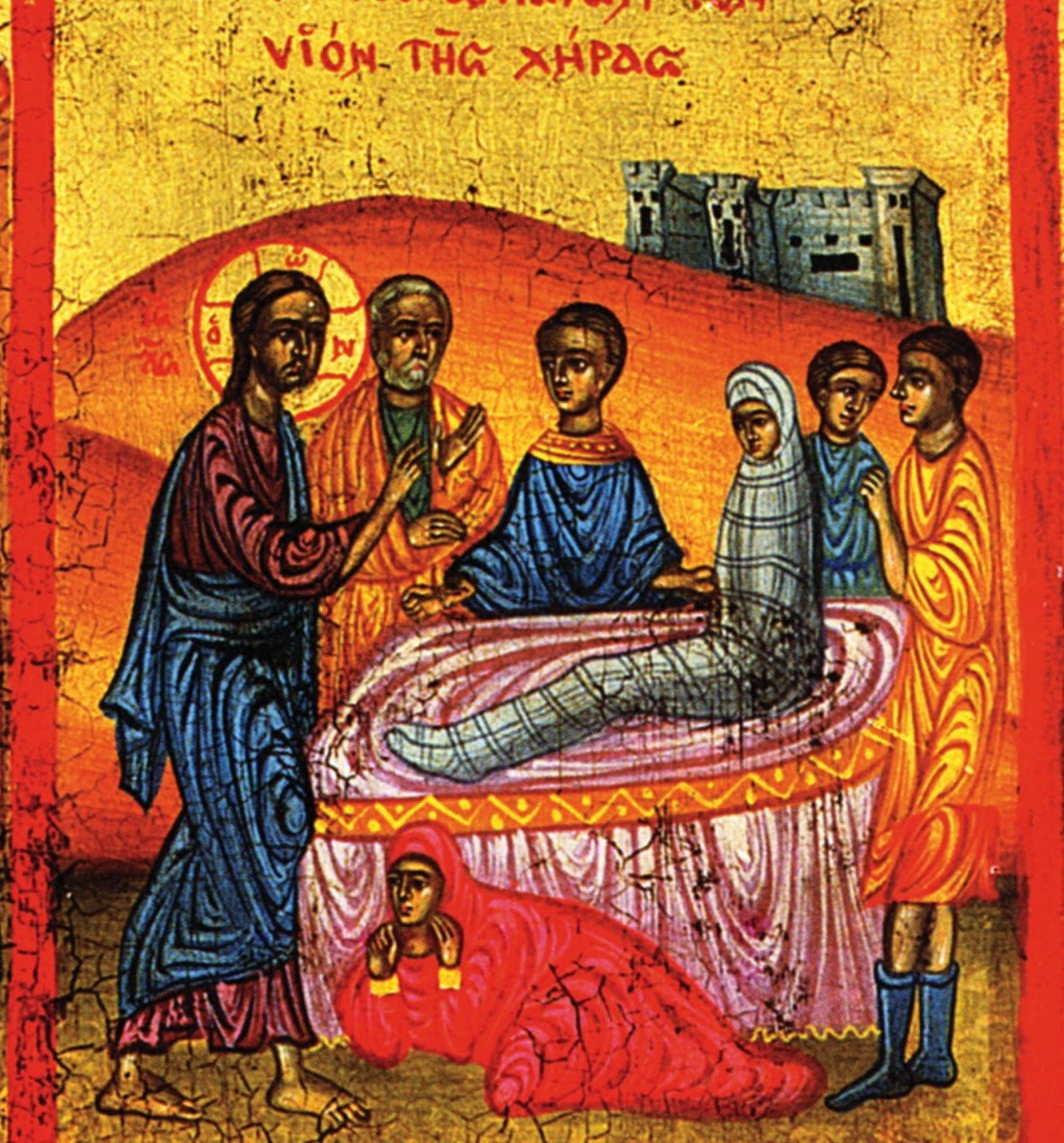
We are sharing with you a sermon that was very meaningful from our brother in Christ, Rev. Chang Soo Kim, presently serving at Living Faith Korean Lutheran Church.  This gives you an example of the fine preaching and pastoral care that comes forth from one of Christ’s undershepherds here in North Georgia.  It is a very beautiful and full treatment of Luke 7:11-17.  What is shared here is actually only a portion of the sermon, but here it is!  For any of you shedding tears for any reason, it will point you to clear and certain hope.

In the name of the Father and of the +Son and of the Holy Spirit.  Amen.

Today’s text explains Jesus’ actions that day.  Jesus went to Capernaum early in the morning to meet the centurion, heard the confession of his precious faith, and healed the servant under his command.  Then, a journey to Nain becomes his next destination.  Nain is one of the small towns of Galilee.  It has the meaning of being lovely or beautiful in Greek.  As its name implies, this place called Nain is scenic, peaceful, and a climate friendly place to live. For a woman who lived there, though, it was not at all.  In verse 12, the Bible explains about the situation of the woman.  The husband of the woman died early, and she had only one son, and lived hard.  Now, when her son grew up and she thought she could depend upon him, had died suddenly.  At that time, what would life have been like for her? Who can comfort her?  Who knows her thoughts?  Can you recognize her disastrous feelings?  She felt desperate and unable to live in real life.

The fact that a widow lives alone means that she cannot escape being a beggar.  The death of her son is a terrible thing, but her own situation is now miserable, and she goes after him crying as she goes to the burial of her son’s body.  At that time, the body of the deceased was uncovered by the pallbearer.  She cannot let go, seeing the cold body of her son going to the burial ground, crying, crying, and following.  The villagers who followed the procession were so sad and nobody opened their mouths.  There was only crying and following in sadness.

Then, according to that day, our Lord came toward Nain with His disciples, and sees the bizarre parade of death.  Our Lord in a compassionate heart, stopped the procession and says to the woman “do not weep.”  The exhortation not to cry here is imperative now.  Do not cry anymore, but stop right now.  Jesus commanded that when the Lord saw her who was grieved, weeping, and crying, His heart went out to her and He said, “Don’t cry.”  To us, this is a really ridiculous command.  This woman is crying because her only son has died and she must go to bury him.  Crying is all she could do.

In Korean proverbs, it is said that when a husband or wife dies, they are buried at the far mountain.  When the child dies, the child is buried in the parents’ heart.  The death of a child is a great shock and pain.  There is nobody here on earth who can comfort such a woman’s heart and cure her sorrow.  So, when people Jesus ordered her to stop crying right now, everyone could have been embarrassed and all thought it very strange. What does He do to make it happen?  If you are not a lost man, you will say a word of comfort to a woman in sorrow, but to say “do not cry” is sure to make you hailed as a lunatic.  Everyone is now alert watching the Lord.

When Jesus saw her weeping, and the Jews who had come along with her also weeping, He was deeply moved in spirit and troubled.  Why is Jesus so sad and even tearful as He says “do not weep?”  At that time, the Lord’s heart was full of mercy for the pain of those who followed Him, along with the woman who lost her son.  This means that Jesus not only shared some emotion, but actually felt sick with them, feeling deeply the pain in their hearts. 

Jesus feels even the pain of those who have never seen Him in faith and up until this point still have nothing to do with Him.  He knows and senses the sorrow that you are experiencing, feeling of pain like they had, and the sting of the bitterness of all people.  How can He do this, even though He has no connection even to some of them?

It is because Jesus, Who has love and mercy for all, has forsaken the heavenly throne, has received the suffering that we must receive from the moment He came to this earth in His sinless human body, and suffered the sorrow that we must suffer.  Jesus also has tried all of the tests given to us.  He is the only perfect human being, but also, at the same time, is perfect God Who can do all things.  So the Lord’s words to not weep were full of love for the woman and beyond what we consider deep.  Jesus saw a woman losing her child and falling into grief and weeping, and our Lord was nothing but sadness and tears.  The heart of the Lord was so strong, though, that the dead would come to life.

In verse 14, we read together today, Jesus went up and touched the coffin, and those carrying it stood still.  He said “young man, I say to you get up!”  Here, we need to pay attention to the fact that once again the woman who was there, as well as everyone else, did not ask Jesus to do anything.  In fact, there is nothing they can ask in this situation … No one there was able to imagine that the dead would live only through this Lord … the family is heading to the cemetery to bury the boy who has already died.  It was already over.

But Who is Jesus Christ?  Today, as Luke says, He is the Savior of the Gentiles, the King of life and death.  He is the God Who holds the keys of death and the grave.  He is true God with all power Who can turn despair into hope when we are lost in our hearts.  He is the eternal Savior who can solve any problem we may have when it is His will … He would give life to a corpse that was already dead and rot … He Himself would live from death … this Jesus is our Lord.  Jesus is the Messiah promised through the Old Testament.  He is the only begotten Son of God.  He is the only Savior Who will save man who is forced to die because of sin and transgression.  We rebelled, betrayed, ignored, and despised as He was crucified on the cross.  Yet … He did not stand over you to blame or rage in anger, but gave you His great and wonderful love that cannot be repaid. 

Indeed, Jesus knew what they needed … this is not an example of the law.  Anyone who is going to be dead or who has died was considered unclean.  People were even reluctant to go to a funeral unless they were a close relative.  Nevertheless, Jesus, despite knowing the warning of this law, came to the coffin where the body was lying, not hesitating or hesitant, laying His blessed hand down on the foulness of death.  If He keeps His hand free, He stays clean.  If He puts it down, He is thought to have become unclean.  But, at the moment His hand goes down and His Word comes forth, the work of life begins.  This is our Lord’s love for us …. Jesus put forth His hand to the young man who died, wielding His mighty life-giving weapon, and raised the dead in a word.  The power of death shrivels before the Lord of life.  He gave life to Him and with His word has given life to you.  Sorrow is turned to joy.  Sadness is changed to comfort.  His cleanliness changes the unclean.  This is grace alone for all who are children living in the cold reality of death, for the people who are now all in the wrong, for all who have thrown up their hands.  The Lord’s command, which cannot be denied, fell.  Everything was immediately done and recovered.  Thus, the word of the Lord is powerful and complete.  As God’s children buried and raised with Jesus in Baptism, this is our confidence on the final day.

Everyone in the world has a reason to cry for one thing or another.  God comes to wash away the tears that flow in the eyes of His beloved children.  Above all, God has promised us through the prophet Isaiah that He will wash away tears from all faces and will remove the shame of His people all over the world (Isaiah 25:8).  Do not weep!

In the name of Jesus,

Rev. Chang Soo Kim